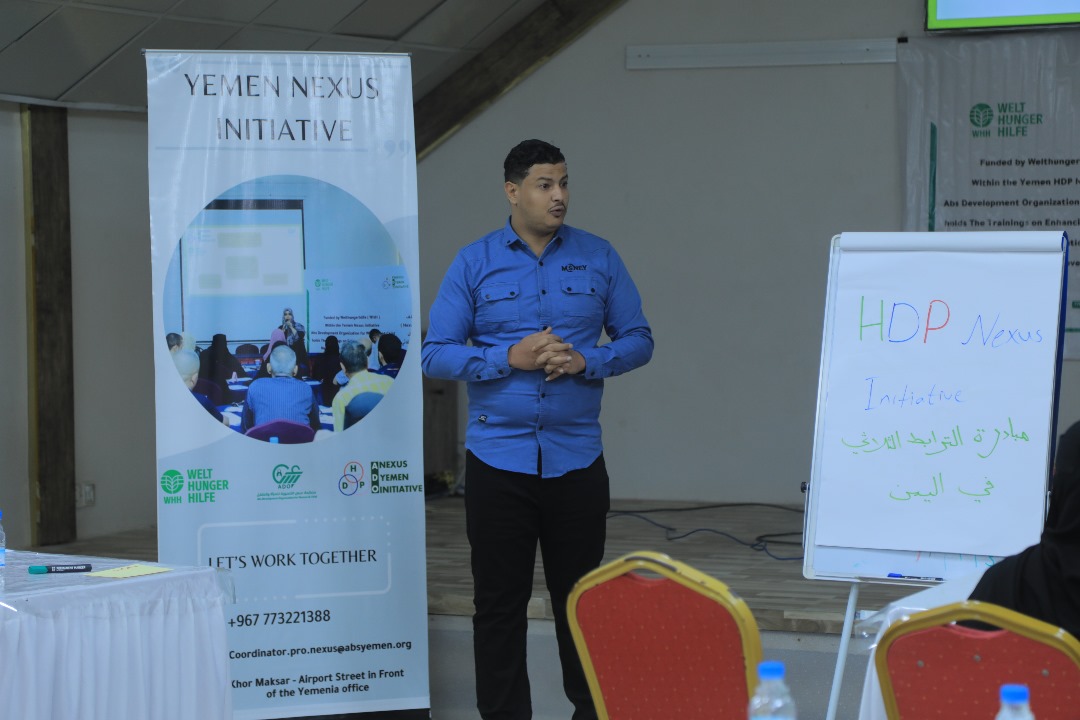
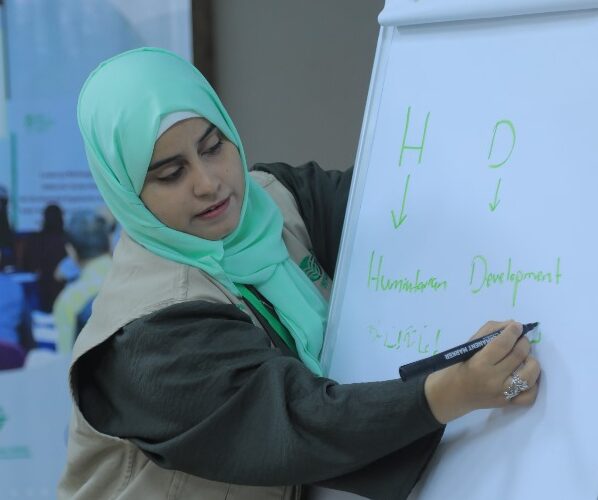
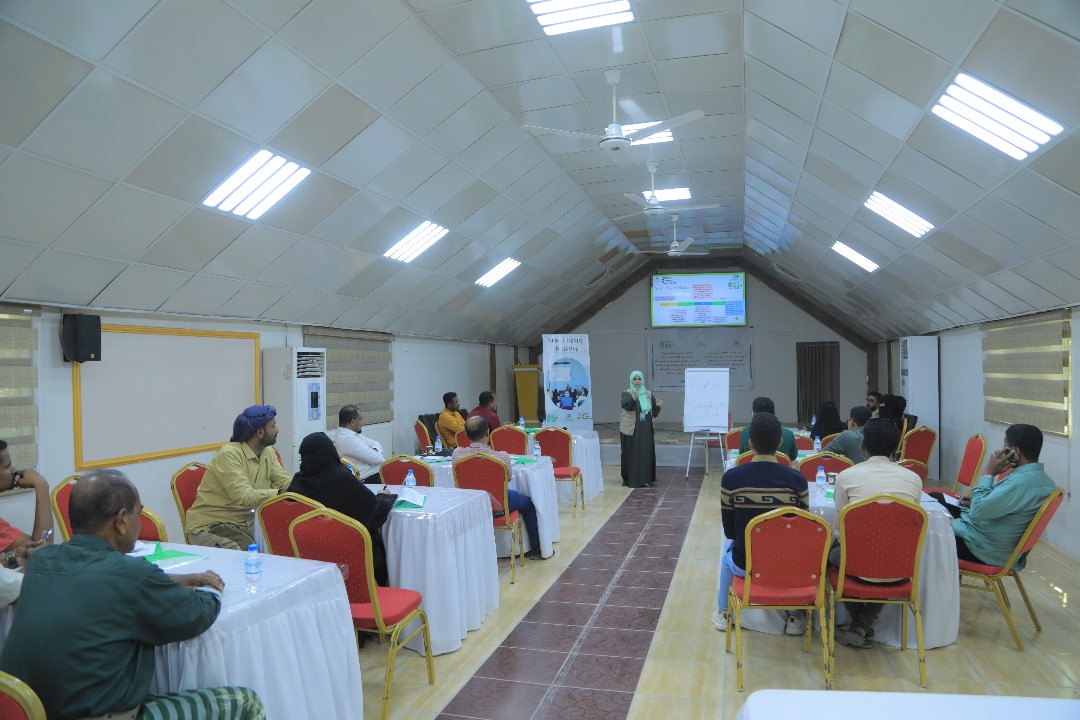
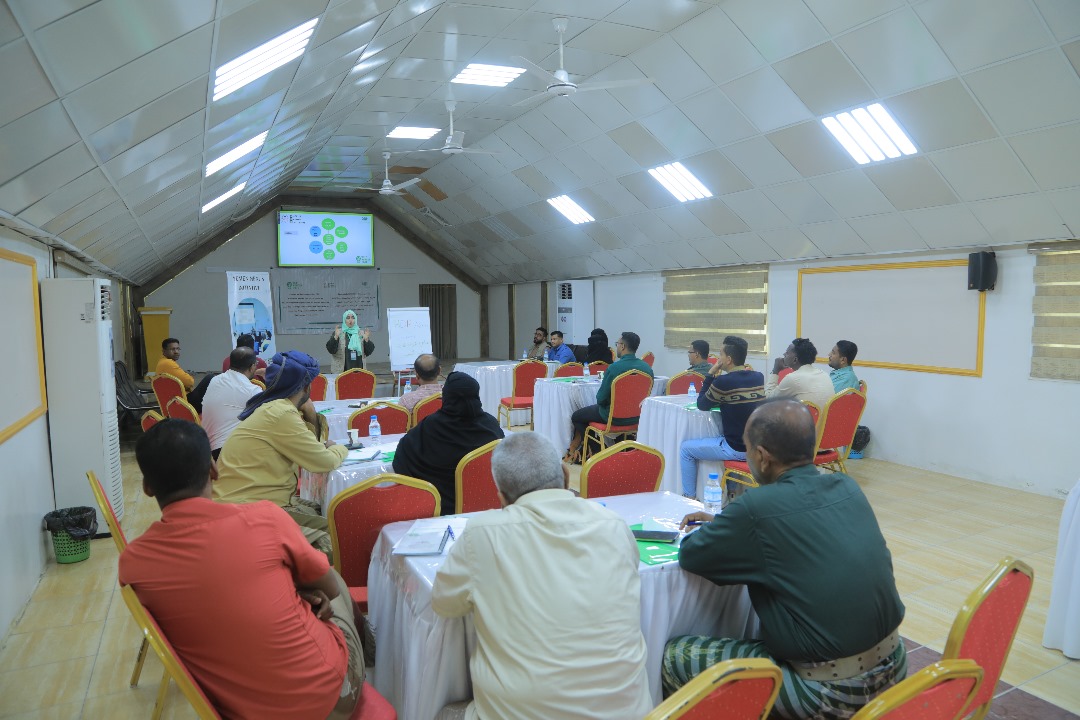
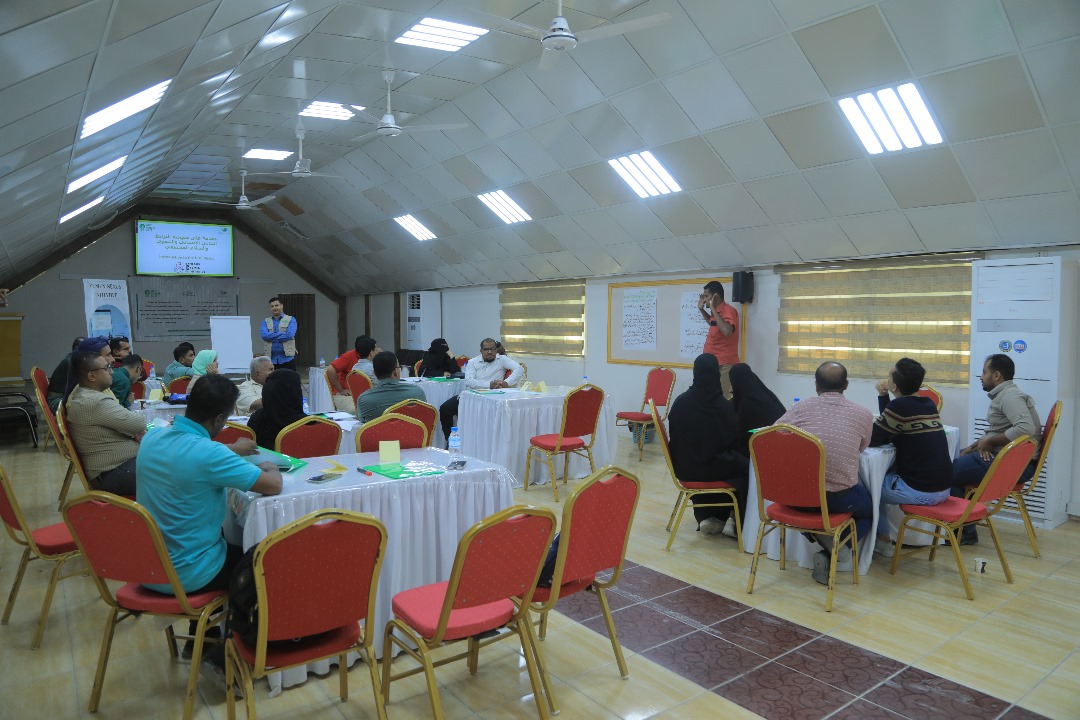
(HDP) Hadramout Training
(HDP) Hadramout Training
Info
The training course on the Nexus approach was able to achieve several key outputs that represent effective results
for participants from different segments, the most important of which were:
- Improve and attribute participants’ understanding of how to integrate humanitarian response, sustainable development, and peacebuilding into projects.
- Developing the skills of participants on how to coordinate work between different sectors using effective tools and techniques.
- Apply concepts in future projects and assist participants in implementing the Nexus approach in their projects.
- Participants learned how to design impactful advocacy campaigns to support Nexus-related policies.
- Participants gained the skills to use evaluation tools to measure the impact of their projects.
- A network of relationships was built between participants from civil society organizations, government agencies, and the private sector.
- Raise awareness among participants of the challenges and potential opportunities in applying the Nexus approach and how to deal with them to achieve sustainable development and peacebuilding.
The course contributed to empowering participants and sustaining
concepts and skills that help them implement more integrated projects in applying
the Nexus approach Instructor’s feedback about the course:
The experience was full of interaction and shared learning, as participants contributed significantly to enriching discussions and practical applications.
From day one, it was clear that there was great enthusiasm from participants to understand the Nexus approach and apply it in their
future projects. The diversity of participants’ backgrounds from civil society organizations, government agencies, and community leaders added a
dynamic character that made the training sessions more inclusive and diverse.
Evident with the new concepts, especially during
the participants’ great enthusiasm and desire to learn, as they showed interaction with practical activities
. Group exercises such as stakeholder analysis and action plan design were highlights that demonstrated participants’ ability
to relate theory to practical application. During these sessions, I felt that the participants were able to go beyond the stage of theoretical understanding
to the stage of practical comprehension, which was reflected in the quality of the ideas and plans they presented.
However, there was a clear challenge in the time allotted for the session. The training material was comprehensive and informative, but
its volume compared to the time available made it difficult to delve into some important topics. For example, topics related to
monitoring and evaluation tools and advocacy strategies needed additional time to explore them more broadly, especially as participants
showed great interest in these aspects as well
. While the process focus activities
were effective, some participants felt that adding more time to these
insatiable challenges they might face in their daily
activities could enhance their practical understanding of WEMC.
On the other hand, feedback from participants was very positive. They were impressed by the training style that focused on interaction
and participatory activities and noted that the course provided them with tools that they could apply directly to their projects. There
were also constructive feedback on the need to allocate more time or organize follow-up sessions to deepen learning and expand training
to include more practical applications.
Despite the challenges associated with time constraints, the course was a successful and fruitful experience. Participants were able to make significant
progress in their understanding of the triple interconnection approach and were motivated to apply what they learned in their projects. For me as a trainer, this experience
was a valuable opportunity to interact with a variety of participants, helping them turn theoretical concepts into practical tools that serve
their communities.
In the future, the training experience can be improved by extending the duration of the course or dividing it into phases, allowing time to delve deeper into
practical topics and providing a wider space for field application. However, this session was a strong start towards empowering and sustaining
participants
to implement more integrated projects.